Return to the Circle, 17 Years later
Earlier this summer, I joined a guided psilocybin retreat in the Dutch countryside — a deeply personal experience rooted in ritual, neuroscience, and self-discovery.
As the Czech Senate moved forward with therapeutic legalization, I found myself reflecting on how these substances might be meaningfully integrated into Central European society. The text below is an edited version of my blog post originally published in Slovak.
Landing in the Circle
At the very time the Czech Senate approved a law permitting the use of psilocybin for therapeutic purposes, this potent medicine was circulating symbolically through my veins. Legally, safely, and under the professional supervision of trained psychiatrists and psychotherapists. One of the key figures behind this legislative shift, Czech doctor Filip Tylš, was sitting across from me with a wide smile.
I had just spent a week in the Netherlands, where it is now possible to undergo a program full of movement, meditation, shared experiences — and within it, two guided ceremonies with psilocybin truffles.
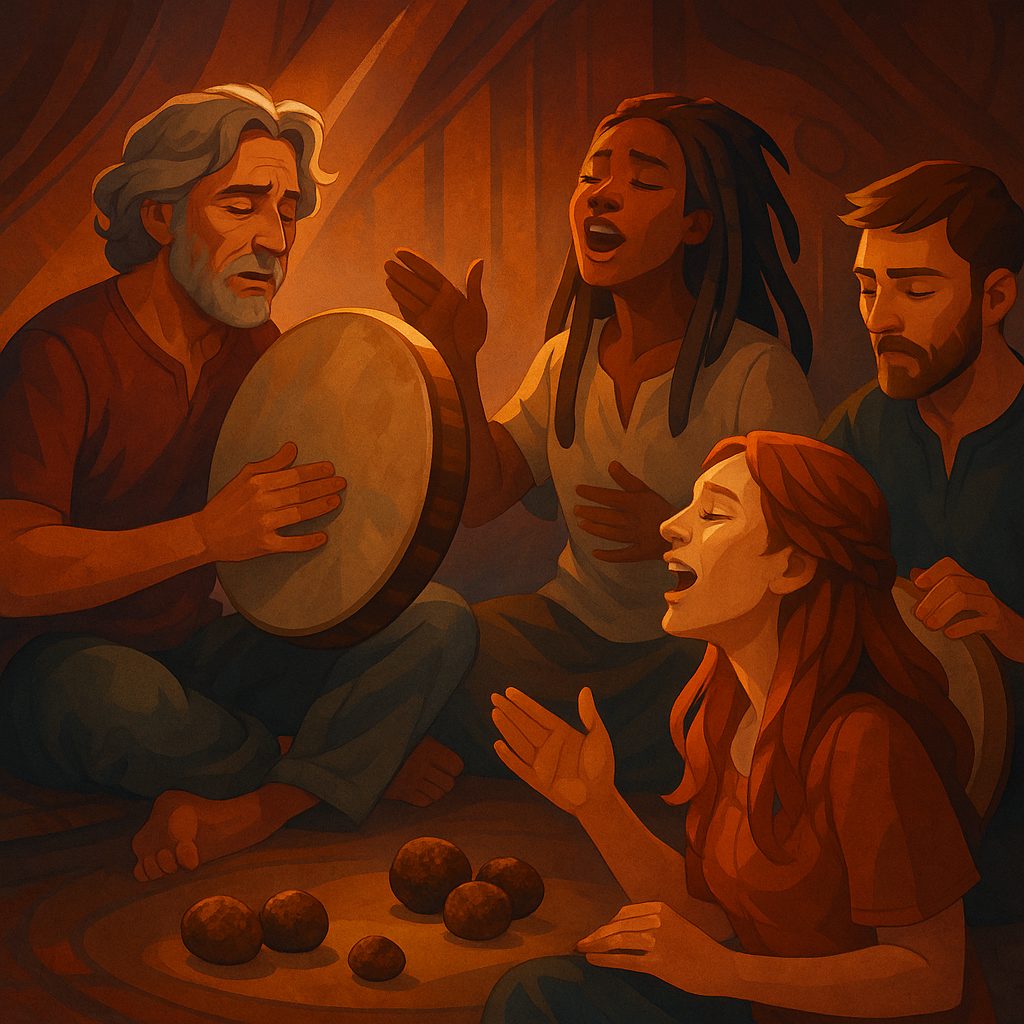
Kristína Pomothy and Marek Homola, who bring together people interested in the responsible use of psychedelics through their Curacura organization, invited a group of Czechoslovak therapists and advocates of the psychedelic renaissance to a remote retreat center in the Dutch countryside. Under the guidance of five facilitators, we had the opportunity — in a safe and held environment — to look deeply within ourselves, process traumas, mourn those we’ve lost, and also drum wildly, sing, dance, and rejoice in the deep human connection that arises in these sacred circles.
From Research to Ritual
In recent years, psilocybin has been used in clinical studies, allowing clinics and research centers like the Czech Psyon to work with scientifically grounded data. These studies show that the substance significantly reduces symptoms of depression, including treatment-resistant depression — often after just one or two professionally guided sessions. Its effects are long-lasting, with improvements persisting for months after therapy. The data also show improvements in mood, a reduction in negative thoughts, and an increased sense of life satisfaction. All of this, of course, depends on these often intense experiences being properly processed and integrated into everyday life.
For me, this was the first psychedelic experience since returning from the Amazon rainforest seventeen years ago, where I dieted with Ayahuasca and other sacred plants of the jungle. And I am immensely grateful for it. In those 17 years, I got married, we had two sons, and several loved ones passed away — including Roger, my Maestro, to whom I’ll be forever thankful. I went through politics, entrepreneurship, and life in a war-torn country. I also had to befriend my ADHD and integrate it into my daily life. Each of these themes resurfaced in some form during the ceremonies — love and respect for my wife, the responsibility of fatherhood, the darkness and weight of the world around us, and also ways of dealing with it.
The ceremonies themselves would deserve several articles — but that’s not the point now. What I want to focus on is how such retreats could be useful in the Czechoslovak context.
A Roadmap for Central Europe
The Czech Republic will be able to launch therapeutic psilocybin programs as of January 2026. Most likely, these will initially focus on treatment-resistant depression. Hopefully, in time, safe spaces for self-discovery will also become available. I currently have no illusions about any rapid change in Slovakia, but educating therapists and creating opportunities for authentic experiences — like those offered by Curacura — could, at the very least, raise awareness in professional circles and prepare the ground for future change.
What matters most, though, is creating space for integration — for processing these experiences, especially those that occur outside of clinical settings. Psilocybin-containing mushrooms grow in abundance in both Slovakia and the Czech Republic, and their collection and use have been part of various subcultures for decades. People who embark on such journeys should have access to a network of contact points — where trained professionals can help them meaningfully integrate and process their experiences. In this regard, there is plenty of meaningful work to be done in Slovakia too.
Because using these mushrooms also comes with real risks. In the wrong setting or state of mind, or with an excessive dose, they can cause extremely difficult psychological states and leave lasting effects on mental health. Harm reduction approaches can significantly reduce these risks.
I wrote this text at Amsterdam airport, waiting for my flight to Slovakia. Back to a country one must still depart from… to meet oneself.